How To Downgrade Windows 10 After 30 Days
How to: Downgrade Windows 10 after the 30-Day Rollback Period Clean install the version of Windows you were previously using. Restore your computer to factory settings. Use a system image to go back to your previous Windows installation. Try disconnecting from the internet, in Bios set your date back to within the 30 day period after upgrade, boot into Windows and see if the option to revert back works. Then come back and tell us! If you upgraded your Windows 7 and Windows 8.1 computer to Windows 10 via Windows Update within the last 30 days, the company is offering you a quick option to rollback to the older version.
Windows 10 is having a great jump start, in only three weeks, after the operating system released to the public millions of users have already upgraded. Perhaps some of the reasons why people are quickly upgrading is because Microsoft is offering Windows 10 as a free upgrade for computers running Windows 7 and Windows 8. Additionally, there a lot of new features, such as Cortana, the Unified Settings app which runs across devices, the return of the Start menu, which combines the Windows 7 Start menu with the Start screen in Windows 8.1, and many more features that you can read in my previous write up here.
Seeing that Windows 10 introduces many new features, that it's headed in the right direction, and that you're getting it for free, there is no doubt that Microsoft wants you to upgrade and quickly. In fact, you only have one year from the day it was launch to take on the free offer after that you'll have to pay to upgrade.
However, since Windows 10 became available to the public, not everyone has had a good experience. Some people have issues upgrading, others have been reporting compatibility issues, the Windows Store not updating apps (which has already been fixed), and a number of other problems. As you can imagine, once people begin having issues almost by reflect the first thing that comes to mind is how can go back from Windows 10 to my previous version, in this case, Windows 7.
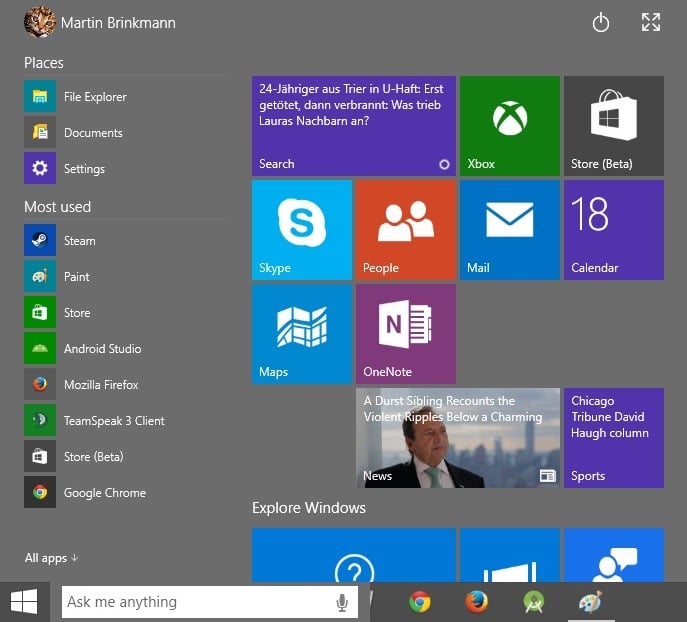
Today, we are going to go through three options, and steps to downgrade from Windows 10 to Windows 7, in case things aren't working out for you.
It's worth to point out that the options are pretty much the same as downgrading from Windows 10 to Windows 8.1, which I have previously added here.
Method one: Recovery by uninstalling Windows 10
Microsoft did something new in Windows 10 that wasn't available in Windows 8, which is adding a feature to the Settings app to allow you seamlessly go back to your previous version of the operating system.
As such, if you are having issues with Windows 10 or you simply don't like it you have options. For example, the software giant is including the 'Go back to Windows 7' feature to make the process a lot simpler. However, there is a caveat; you only have a month after you have upgraded to Windows 10 to go back.
Now, if you're still on the one-month 'trial', you can follow the instructions below to roll back:
1- Use the Windows + I shortcut to open the Settings app.
2- Navigate to Update & security and go to Recovery.
3- If everything is set correctly on your PC, you'll see the option Go back to Windows 7. Here simply click the Get started button.
4- At this point, you will need to pick the reason you're going back, click Next.
5- You will get a warning that you'll need to reinstall some apps and programs, and you'll lose any changes made after upgrading to Windows 10. Keep in mind that while a file backup is not necessary, but it's highly recommended, and then click Next.
6- Make sure you know your Windows 7 password as you'll be locked out of the system without it, and then click Next.
7- Finally, click the Go back to Windows 7 and to begin the downgrade process.
The time to complete the process should only be several minutes, but the time will vary from computer-to-computer. After you're back in Windows 7, don't forget to check that all your programs work correctly. As always make sure Windows is up to date, as it has probably been several weeks since and Microsoft may have already released some patches.
Method two: Downgrade by using you previous backup
You should always keep a backup of your computer before modifying any operating system. If you haven't upgraded to Windows 10, check out my previous post on how to prepare your computer for Windows 10. That will guide you through what you need to do before upgrading, including creating a full backup of your computer.
If you have the backup, you are haft way done. You only need to make a backup of your new files since the last full backup or simply copy all your files to an external drive. Besides, you may want to note any new software you have installed on your computer since the last backup, as you will need to reinstall them later on.
You can do this by:
- Searching for Control Panel with Cortana.
- Navigating to Programs and Features.
- Arranging the list of apps in your system by Installed On.
After you have the backup of your files, and you know the apps you need to reinstall, reboot your computer using the 'repair disc', which you're prompted to create after creating the initial full backup.
Quick Tip: If you don't have repair disc, you can also boot with the Windows 7 installation media to perform the recovery.
Connect the external hard drive with the backup, reboot your PC, follow these steps:
- While in the Setup wizard, click Next, and then Repair your computer.
- Select 'Restore your computer using a system image that you create earlier', and click Next.
- Select the backup to restore and click Next.
- Select the image you want to use and click Next.
- Click Next one more time and then Finish to begin with the recovery process.
Once the process completes, you'll be back to the previous version of your operating system, in this case, Windows 7.
Method three: Downgrade by clean installation

Alternatively, in the same way like you could do in going back to Windows 8.1, you can downgrade from Windows 10 to Windows 7 by doing a clean installation of the operating system. This method is more suited for people that have the time and don't trust the concept of rolling back.
This process involves having to reinstall the operating system using the Windows 7 installation media, and formatting, which will erase everything on the hard drive. You'll also need to reinstall all your applications once again, and use a backup to restore all of your files. This process takes more time than other methods, but it will ensure that everything works correctly.
Follow this steps:
- Reboot your computer with Windows 7 installation files (make sure your PC is set to boot from the drive with installation files).
- During the Windows Setup, click Next, accept the licensing, and click Next.
- Click the option Custom: Install Windows only (Advanced) option to do a clean installation.
- Delete any partition created by you current installation of Windows.
- Select the empty drive and click Next to start the installation process.
Important: If you have a partition where you store files or a secondary hard drive, you don't have to delete these partitions.
This is also your first chance to preview the final chapter of Alex Hunter’s story in The Journey: Champions. FIFA 19 Demo Available for Download - PS4 and Xbox One - EA SPORTS THE FIFA 19 DEMO Experience the prestigious UEFA Champions League in Kick-Off mode with your choice of 10 clubs from around the world.Be one of the first to experience the prestigious UEFA Champions League in Kick-Off mode with your choice of 10 clubs from around the world like Manchester United, Real Madrid, and Juventus. DOWNLOAD YOUR SEASON STARTS NOW Dreams are achieved and legends are made in the prestigious UEFA Champions League. Fifa 18 demo download xbox 360. Experience it in the demo.
Once the Windows Setup process completes, you will once again back to Windows 7. However, remember that you need to restore your files and reinstall and configure all the programs you have previously installed on your system.
Wrapping this up
As you can see, downgrading from Windows 10 to either Windows 7 or Windows 8.1 are virtually identical. Just remember that in both versions of the operating system you only have a month to use the Settings app to go back to you previous version. If past the 30 days, then you likely have to go through one of the other two methods.
Always remember to make a full backup first, you'll never know when you are going to need it to recover!
Are you giving up on Windows 10 and going back to Windows 7? Let us know your experience in the comments below.
More Resources
Remember that we have many other articles on Windows 10, if you need help you always check these other resources:
So you’ve grabbed the free upgrade, installed the all new Windows 10 and given it a try for a couple weeks. Now if you don’t like Windows 10 for whatever reason, be it for the privacy issues, learning curve, or program incompatibilities, you can easily downgrade to your previous version of Windows with just a few clicks. The good thing about downgrading is that you will get to keep all your programs, files, and settings intact.
In fact, a smooth upgrade and downgrade process is one those improved features of Windows 10. And if you would like to downgrade, here is how you can to a previous version of Windows from Windows 10.
Note: even though I’m downgrading to Windows 7 from Windows 10, the procedure is the same even if you want to downgrade to Windows 8 or 8.1.
Things to Know and Do Before Downgrading
Before downgrading from Windows 10, there are a few things you should know and do.
1. Downgrading from Windows 10 to Windows 7, 8 or 8.1 only works if you’ve upgraded your machine to Windows 10. So, if you’ve done a fresh installation of Windows 10, then you cannot downgrade.
2. You only have a month from the date of the installation of Windows 10 to downgrade from it. After that you may not be able to downgrade. Make sure to make up your mind before you run out of time.
3. Make sure that you have the “window.old” folder in your C drive and you have not changed or deleted any of the said folder contents.
4. Any settings you’ve applied to your Windows 10 machine will be lost as a part of the downgrading process.
5. If you’ve secured your previous version of Windows with an administrator password, then make sure that you have that password with you. Otherwise you may not be able to log in after downgrading.
6. Though the downgrade process is smooth, make sure that you have a good backup of all your files.
7. You may sometimes need to reinstall certain programs. This is not likely to happen, but be ready for it.
Downgrade from Windows 10
Downgrading from Windows 10 is easy and straightforward. To start, click on the “Notifications” icon and select the “All Settings” option.
The above action will open the Windows 10 Settings panel. Select the “Update and Security” option.
Once the Update and Security panel has been opened, select the “Recovery” option from the left sidebar.
On the right panel of the window, you will see the “Go back to Windows 7” option. Just click on the “Get Started” button to start the downgrading process. If you have used Windows 10 for over a month, you will not have this option.
The above action will bring forward a window asking for a reason for your downgrade decision. Simply select an option and click on the “Next” button to continue.
Windows will show you some need-to-know stuff. Read it and click on the “Next” button to continue.
As I said before, if you’ve used a different password for your previous Windows installation, then make sure that you have it with you. Click on the “Next” button to continue the procedure.
Finally, click on the “Go back to Windows 7” button to commence the downgrading process.
At this point, you’ve done everything you need to do. Just sit back and wait while Windows downgrades your machine. Depending on your previous Windows installation, the downgrading process may take a while.
Downgrade To Windows 8.1
Once the downgrading has been completed, you can start using your system. Of course, you may still need to configure some settings, and if you find any problems with the installed applications, then you may also want to reinstall them.
In the future, if you ever want to give Windows 10 a try again, you can do that for certain. After all, Windows 10 is free for the first year.
Do comment below sharing your thoughts and experiences about downgrading from Windows 10 to Windows 7, 8 or 8.1.
The Complete Windows 10 Customization Guide
In this ebook we’ll be exploring the multitude of options to fully customize Windows 10. By the end of this ebook you’ll know how to make Windows 10 your own and become an expert Windows 10 user.